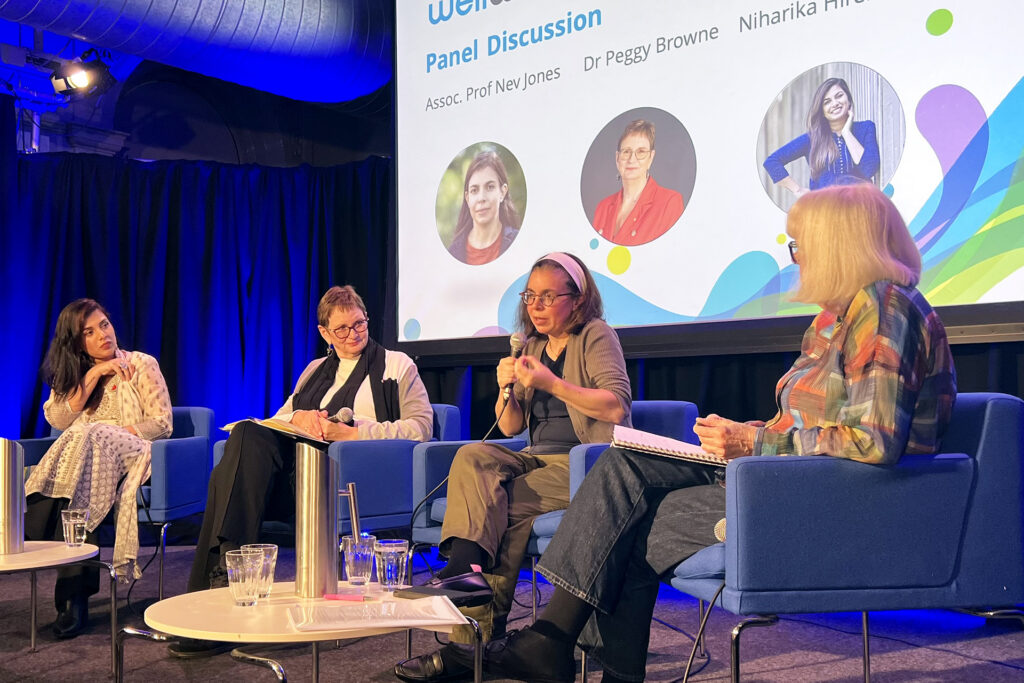
Wellways marked a significant milestone this week, hosting the 25th Annual Woodcock Public Lecture at the Wheeler Centre. Despite a wet and wintry Melbourne evening, more than 300 people joined in person and online – a strong reflection of the urgency and importance of this year’s topic.
A powerful question at the centre
This year’s lecture explored a deceptively simple but critical question:
“Who gets to decide what a good outcome looks like in mental health?”
For decades, systems and services have largely defined success on behalf of the people they support. This year’s conversation challenged that assumption inviting the sector to rethink outcomes from the perspective of lived and living experience.
Moving beyond “tick-box” outcomes
Keynote speaker Associate Professor Nev Jones delivered a thought-provoking address, drawing on her experience across research, government, and service delivery.
Her central message was clear: what we currently measure in mental health often misses what matters most.
Too often, systems focus on easily quantifiable data, such as hospitalisations or service use, while overlooking deeper questions about quality of life, autonomy, relationships and purpose.
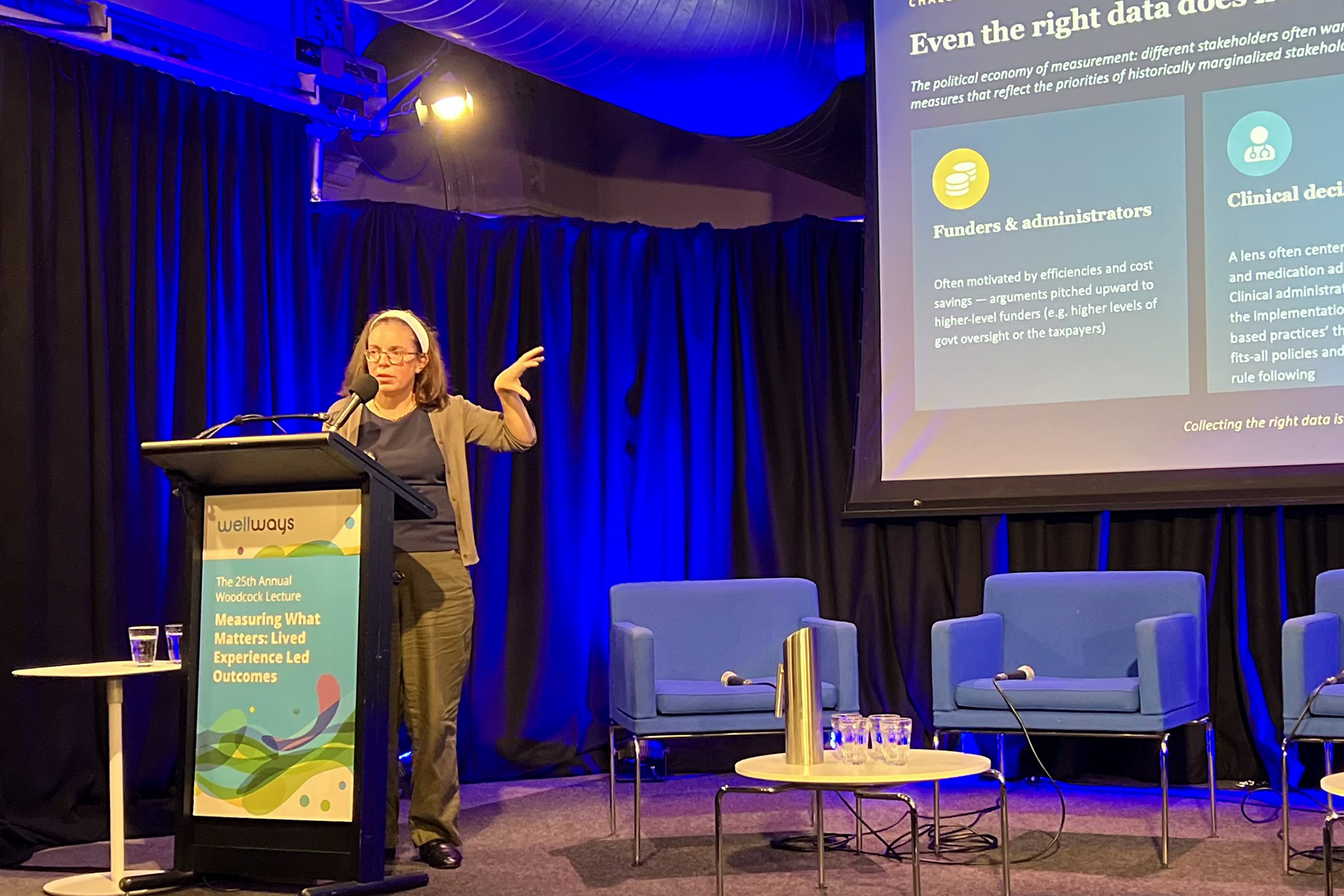
Associate Professor Nev Jones discussing the political economy of measurement.
“For too long, we’ve assumed we know what a good outcome looks like, without asking the people most affected.”
Nev highlighted the need to shift from standardised, one-size-fits-all metrics to approaches that recognise individual goals and lived realities.
Outcomes are not one-size-fits-all
A central takeaway from the lecture was that “good outcomes” are far from universal. What represents success for one person is often completely different for another, shaped by unique cultural backgrounds, identities, and personal goals.
True progress requires shifting our focus toward self-defined goals and measuring the actual quality of a service, like the safety and comfort of a home, rather than just ticking a box for housing stability.
It is about prioritising a person’s autonomy, social connections, and sense of meaning. As Nev pointed out, unless we address the structural barriers like poverty and racism that dictate who gets access to resources, even the most well-intentioned services can only go so far.
The value of lived experience leadership
Following the keynote, a panel featuring Dr Peggy Brown and Niharika Hiremath, facilitated by Wellways Director of Lived Experience Mary O’Hagan, deepened the discussion.
Niharika highlighted the risks of oversimplification, particularly when working with multicultural and intersectional communities.
“If we only count who is in the room, we never measure why so many are kept out.”
She challenged the sector to move beyond surface-level inclusion and to genuinely embed the voices of those most impacted especially those often excluded from decision-making.
Naming the real drivers of change
Panellists reflected on the recurring call for honesty across the sector. Improving outcomes requires a willingness to openly acknowledge where current systems fall short, how funding and policy structures constrain progress, and who holds the power in decision-making.
Crucially, it means recognising that a person’s environment and structural barriers often dictate their success far more than clinical interventions.
While the scale of change required can feel daunting, Dr Peggy Brown reframed this reality as a clear opportunity for action, noting, “The need is clear… we just have to start – and keep trying.”
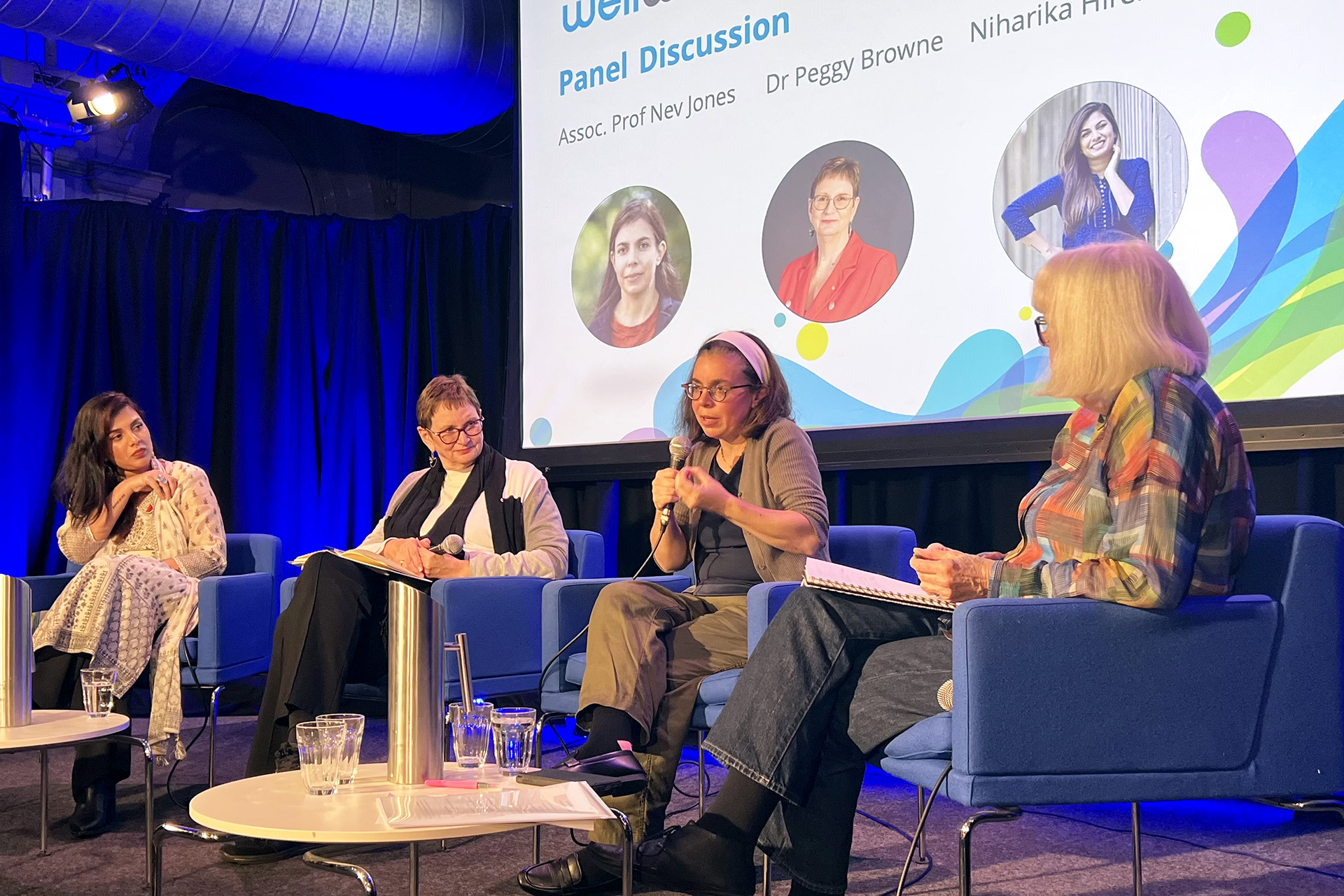
Panelists (left to right): Niharika Hiremath, Dr Peggy Brown, Associate Professor Nev Jones, and Mary O’Hagan
Building a more accountable future
The discussion closed with a clear call to action for the sector to start measuring what truly matters to people, rather than just what is easy to count.
This means meaningfully including diverse lived experience voices, focusing on outcomes that reflect dignity, connection, and real life, and actively challenging the structures that create unfairness.
While we must acknowledge this systemic change will not happen overnight, steady progress depends on our shared courage, collaboration, and sustained effort.
Looking ahead
As Wellways continues to explore how outcomes are defined and measured, this year’s Woodcock Lecture has sparked critical conversations across the sector.
It also reaffirmed the purpose of the lecture series: to challenge assumptions, elevate lived experience, and inspire meaningful change in mental health systems.
“When we get the balance right, we don’t just survive — we thrive.”