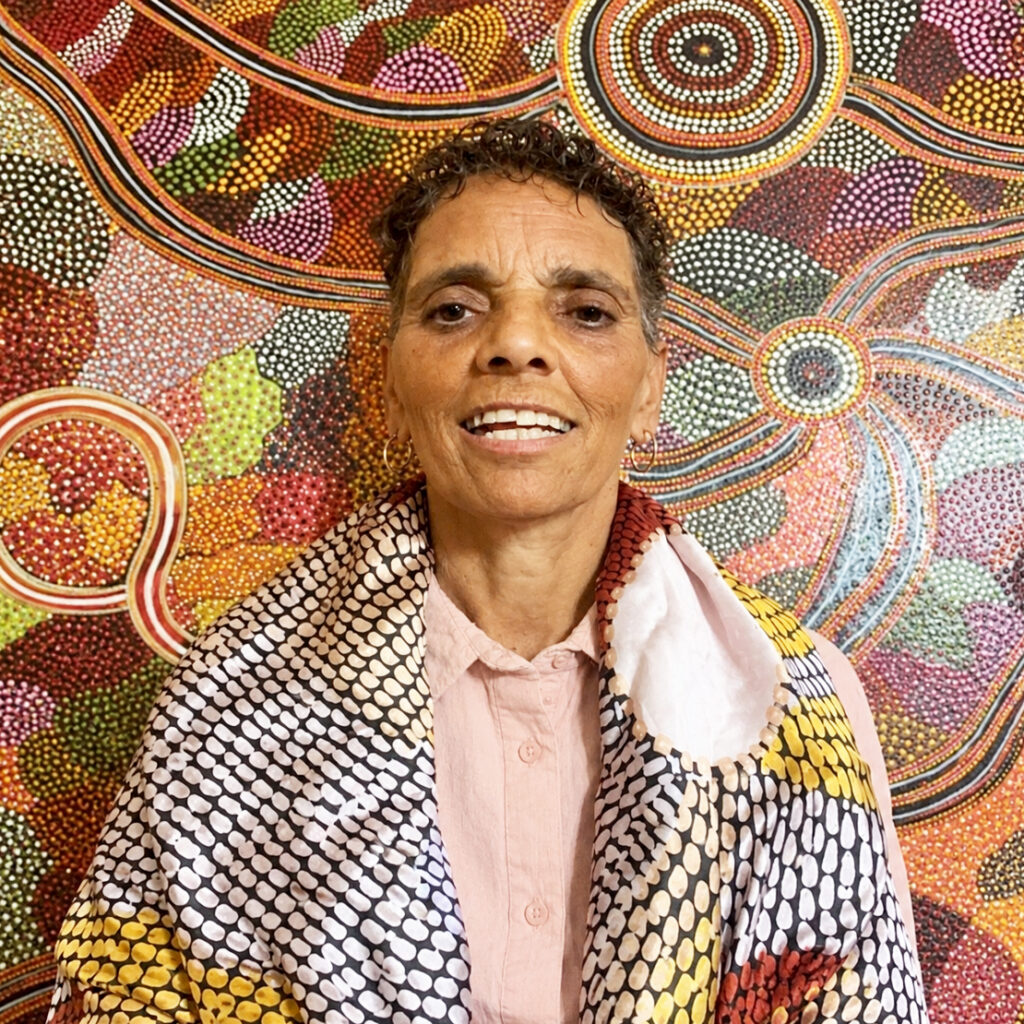
She volunteers at Mildura Base Public Hospital, has contributed artwork to Mildura District Aboriginal Services (MDAS) for its free breast cancer screening service, and recently started coaching local teenagers in basketball.
It’s hard to believe she has only been in Mildura for a few years. She has built a life rich in connection and community, but starting over wasn’t easy.
Finding belonging
When Mel arrived in Mildura, she didn’t know anyone. She had left her hometown because of family violence and was starting again, while navigating the impact of what she had experienced on herself and her children.
She knew she needed somewhere to talk. Somewhere she could be heard, connect with people and begin finding her place.
“We all have mental health. You can be going good and then you have those days when things come up. You do need to go and talk to someone about that.”
That’s when Mel started dropping into the nearby Mental Health and Wellbeing Local.
“I didn’t know anyone, so I just wanted to get involved with the community and meet people.”
Mel encouraged her sons to do the same, reminding them that when difficult experiences come back, speaking up can make a difference.
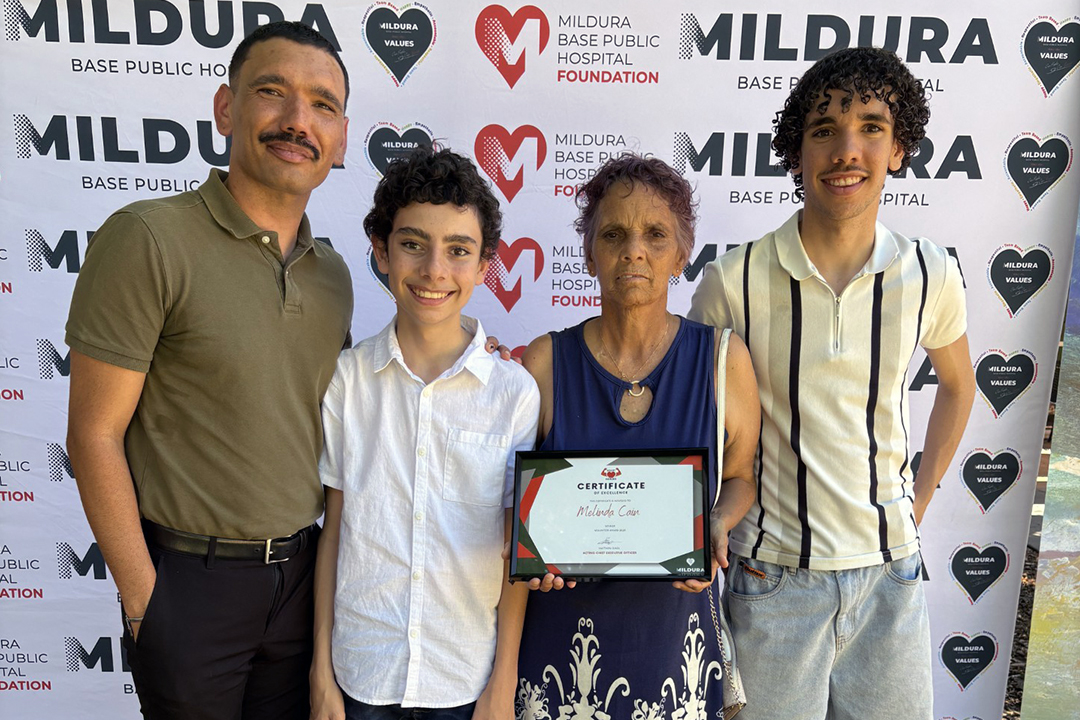
Stonger together: Mel accepting a volunteer award with her sons, Kieran, Euraba and Tyler.
“I tell my sons, as you get older, it might get easier, it might get harder, but when that trauma comes up, reach out. Reach out and don’t hold anything back.”
“We can’t help them if they don’t speak.”
For Mel, knowing when things are building is also part of knowing when to reach out.
“When you get emotional, really upset or angry, you know it’s building. It’s like a stop sign. You’ve got to recognise it before you get to red.”
But Mel says, walking through the Mildura Local Service door gave her more than somewhere to talk. It opened up opportunities to meet people, join groups and build genuine connections.
“I feel comfortable down there,” she said. “Sometimes, it’s like I’m a part of the furniture.”
A friendship beyond the Local
This is when Mel met Edward, another participant at the Local Service.
“He’d come to this area and had no family. He didn’t know anyone and he’d been through a hard life. We just moved together through it.”
Their friendship became part of the support they found in each other, showing how connections made through a service can grow into something much bigger.
“It’s beyond the Local, really beyond.”
Sharing her story through art
For Mel, art is another way to connect, make sense of her experiences and share them with others.
That’s at the heart of Cups That Care, a creative project where participants turned their lived experiences into bold designs for biodegradable café cups now used across Mildura.
“It went on for six weeks and there was fun and laughter and creativity. It was just good.”
Mel created two powerful designs, one features two sets of footprints representing Mel and Edward journey.
“I asked Edward what his favourite colour was and he said green. So I used green, and then I thought, that’s a good colour because it represents growth.
“Eucalyptus is a healing plant. It’s used in smoking ceremonies, and that’s why I included it. It represents healing you from sickness to health and the importance of community.”
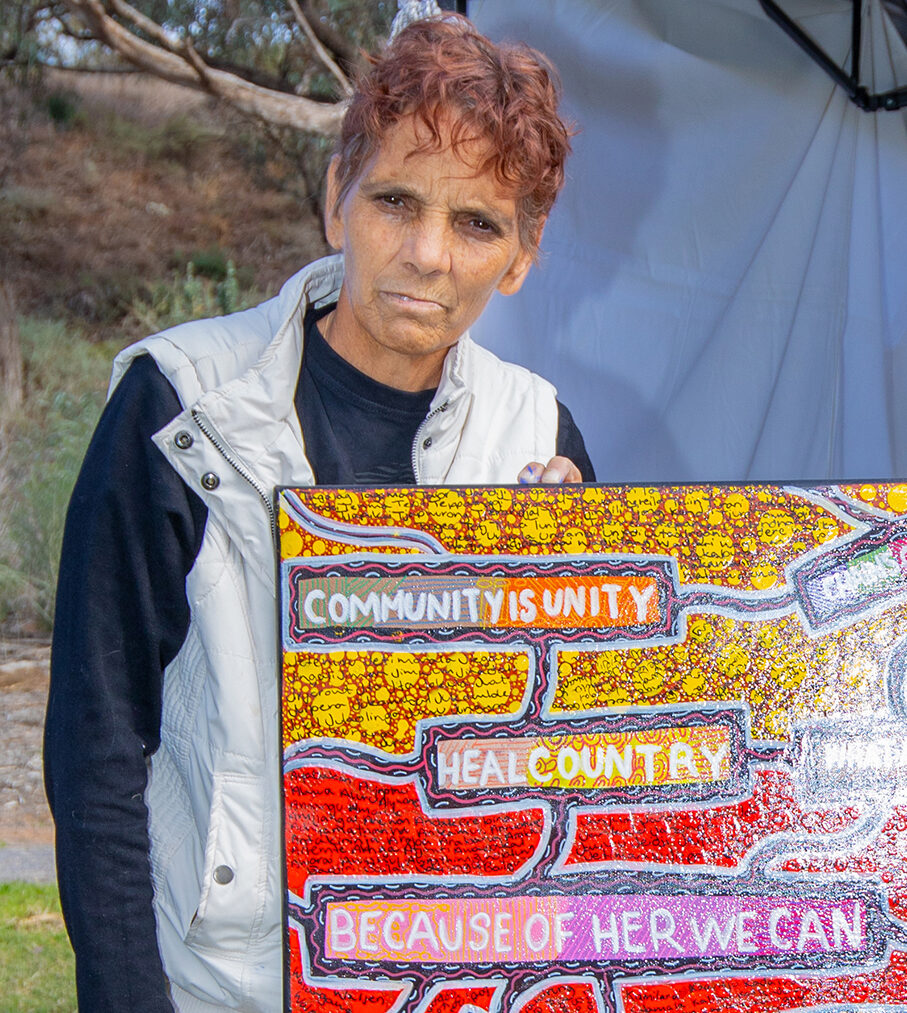
Always creating: Mel now produces artwork for a range of community organisations across Mildura, Victoria.
Cups that spark conversations
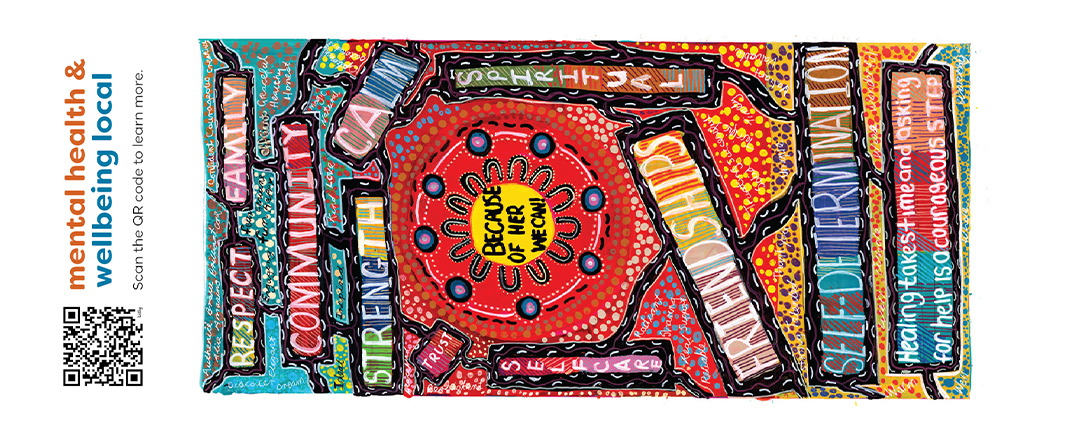
The power of being heard: Mel’s Cups That Care design reflects the support and connection she found at the Mildura Local Service.
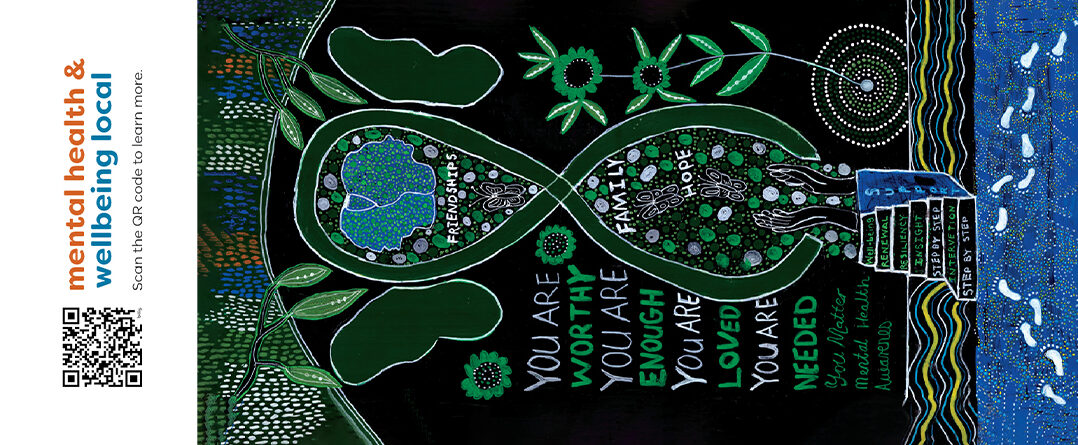
Path to healing: Mel’s Cups That Care design reflects her and Edward’s journey through the Mildura Local Service and towards healing.
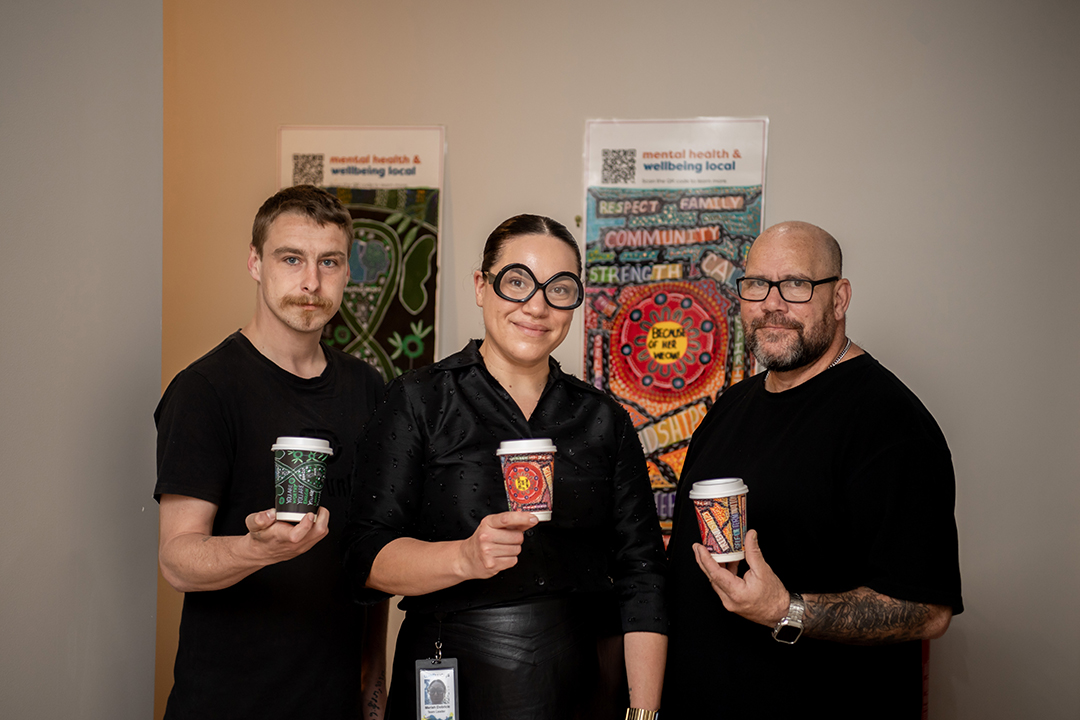
Taking Cups That Care to the community: Edward shares the story behind the project with local media, alongside Mariah and Glenn from the Mental Health and Wellbeing Local.
Together, we thrive
This year’s World Mental Health Day theme, Together We Thrive, recognises that we are stronger together and that we all benefit from the connections we make.
Mel came to Mildura looking for connection. Now, she is sharing her art, time and experiences with others, hoping her cups help people feel less alone and more open to talking about mental health.
“Everyone’s struggle is different, but recovery is possible and when we do it together, we are stronger.”